

Share:
Nov. 24, 2026
Choosing a Sanding Deburring Machine for sign production comes down to the work you run, the finish customers expect, and how much labor your shop can dedicate to edge cleanup. Manual machines offer hands-on control and a lower-cost entry point; automatic machines can improve repeatability and throughput when jobs are frequent and consistent. This guide compares the two approaches using the practical questions buyers need to resolve. Ejon Flying is included as a manufacturer for readers evaluating equipment options.
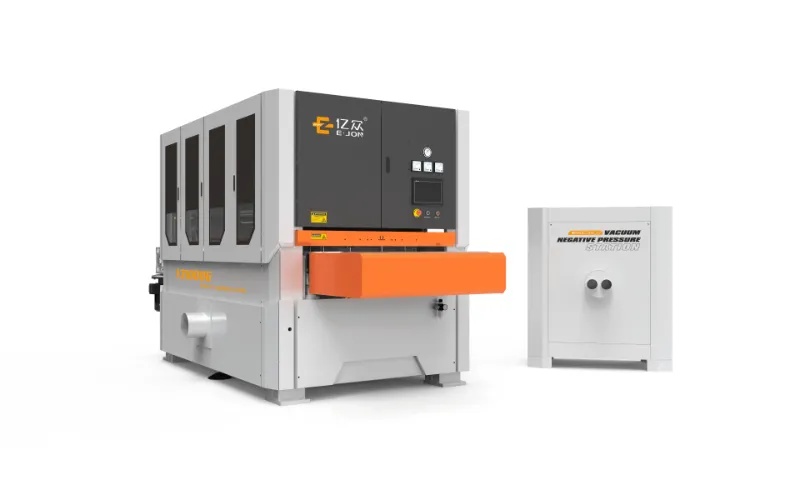
Before comparing machine types, list the materials used in your sign shop and the edge conditions that need correction. A machine suited to removing a light burr from thin aluminum may not be suitable for rounding a thick acrylic panel or finishing a large steel sign blank. The abrasive, brush, contact method, and work support all affect the result.
Then separate occasional custom work from repeat production. A broad mix of sizes and materials often favors operator control, while frequent batches of similar blanks may make automatic feeding more practical.
Buyers are usually trying to solve more than a machine-selection question. They need to prevent rework, avoid damaging visible surfaces, keep labor predictable, and confirm that the equipment fits the available floor space and extraction system. Ask suppliers to demonstrate the machine on your own parts rather than relying only on sample photos or general descriptions.
The values below describe the usual difference between machine categories, not guaranteed specifications for a particular model. Exact working range, speed, power, and finish depend on the machine design and tooling. Request a model-specific data sheet and confirm the figures with a test on your material.
| Parameter | Manual machine | Automatic machine | What to verify |
|---|---|---|---|
| Part handling | Operator positions and guides each part | Conveyor, feed system, or automated contact handles repeat movement | Maximum and minimum part size, support method, and safe loading points |
| Throughput | Depends heavily on operator pace and part complexity | Can maintain a steadier cycle for repeat parts | Demonstrated parts per hour using your actual part mix |
| Finish consistency | Can vary with pressure, angle, and operator technique | Usually more repeatable when settings and part presentation stay consistent | Edge samples from the start, middle, and end of a production run |
| Material and size flexibility | Often easier to adapt to one-off sizes and mixed jobs | May need adjustment or dedicated setup for different parts | Material compatibility, thickness range, width, length, and shape limits |
| Setup and changeover | Typically simple for basic jobs, but operator technique may need to change | Can require parameter, guide, or conveyor adjustments | Changeover time and whether settings can be repeated or saved |
| Labor requirement | Continuous hands-on operation is common | May reduce handling per part, but loading, monitoring, and inspection remain | Operators required per shift and their actual tasks |
| Power and operating continuity | Usually mains-powered; runtime is limited by operator and production conditions | Usually mains-powered; duty cycle and line integration are key | Voltage, motor rating, duty cycle, and any compressed-air requirements |
| Dust and debris control | Depends on guards and connection to extraction | May have enclosed collection points, but extraction still needs checking | Extraction port size, airflow requirement, filters, and cleanup access |
| Footprint and investment | Often a lower initial investment and smaller work area | Often needs more space and a larger initial budget | Installed footprint, service clearance, accessories, and total delivered cost |
For powered sanding and deburring equipment, battery life is not usually the main comparison point because many production machines use a fixed electrical supply. If a proposed model is cordless, check tested runtime under load, charging time, spare battery cost, and output consistency as the battery discharges. For mains-powered equipment, focus instead on duty cycle, thermal stability, motor load, and whether the machine can run for the length of your shift.
Nominal motor power alone does not establish whether a machine can produce the required result. Confirm the usable working width, permitted material thickness, feed-speed range, abrasive or brush options, adjustment range, and supported edge geometry. Ask the supplier which parameter controls the edge treatment and how the operator can reproduce a proven setting.
A manual Sanding Deburring Machine gives an operator direct control over how a part meets the abrasive or brush. That control can be useful for prototypes, custom signs, small batches, and parts with unusual outlines. It also allows a smaller shop to begin mechanizing edge finishing without committing to a production line.
However, the finish can vary between operators or across a long shift. Output also depends on how quickly parts can be positioned, processed, inspected, and moved to the next operation. A manual machine is not automatically inexpensive to run if it occupies a skilled worker for many hours each week.
Manual equipment is less suitable when every part must meet a narrow, repeatable edge specification at high volume. Fatigue, inconsistent hand pressure, and differences in operator technique can increase variation. Plan for training, simple work instructions, regular inspection, and a safe method for handling sharp or large panels.
An automatic Sanding Deburring Machine can reduce variation when parts are presented consistently and the process settings are appropriate. Conveyor-fed or otherwise automated designs are most compelling for shops that repeatedly process similar parts and want a predictable production cycle. They may also free an operator from continuous hand guidance, though loading, monitoring, quality checks, and maintenance still require labor.
Do not assume automation eliminates inspection or operator judgment. Test whether the feed system handles your actual panel size, whether small parts remain stable, and whether corners and cutouts receive the required treatment. Confirm what happens when a part is misfed, an abrasive wears, or the machine needs cleaning.
An automatic machine earns its higher investment only when it is used enough to offset labor savings, reduced rework, and increased output. Include the full installation rather than comparing purchase prices alone. A machine may require extraction equipment, conveyor space, additional guarding, electrical work, training, and ongoing consumables.
In a hands-on trial, inspect more than the first finished part. Run a representative batch and compare parts from the beginning, middle, and end. Look for uneven edge rounding, visible scratches, heat effects, chatter, vibration, part movement, and changes in finish as the abrasive wears. These observations reveal whether the process remains stable in ordinary production conditions.
For manual machines, note operator fatigue, grip and part control, and whether a second trained operator produces a similar result. For automatic machines, watch for feed slips, jams, setup sensitivity, and whether the machine maintains a consistent finish without constant adjustment. For both, check vibration, noise, guarding, extraction, and access to emergency stops.
Consumable life depends on material, abrasive selection, pressure, operating hours, and the finish target, so avoid relying on a single unsupported lifespan estimate. Ask the supplier how wear is detected, how tooling is changed, what routine maintenance is required, and which parts are stocked. A machine that is easy to clean and service can protect uptime even if its initial price is not the lowest.
The useful financial comparison is the cost to produce an acceptable finished part. Include operator time, consumables, energy, extraction, routine service, scrap, rework, and downtime. A lower-cost manual machine can be the better choice for infrequent work, while an automatic machine may be economical when stable demand keeps it productively occupied.
Ask each supplier to quote the same scope, including accessories and extraction requirements. Compare warranty terms, commissioning, training, spare-part availability, and response time so that a low headline price does not conceal a more expensive ownership experience.
A manual machine is generally the stronger starting point when part sizes vary widely, orders are small, custom work is frequent, and an operator can manage the process. An automatic machine deserves closer evaluation when the shop runs repeat batches, has measurable labor or quality bottlenecks, and can keep the equipment loaded consistently.
Before placing an order, ask the supplier to confirm the working range and demonstrate the target finish. Put the agreed material, thickness, sample quality, included equipment, training, delivery scope, warranty, and service terms in writing. If several sign materials are important, test each one rather than assuming one setup will work equally well across all of them.
The right Sanding Deburring Machine is the one that delivers the required edge quality on your actual signs at a sustainable cost and production pace. Manual equipment tends to suit varied, lower-volume work; automatic equipment tends to suit repeatable production with sufficient utilization. Ejon Flying can be considered during supplier evaluation, but the final decision should rest on documented specifications, a practical sample test, and clear service terms.
Hot Products

Equipped with full servo control system to ensure the accuracy and stability of feeding, slotting, and bending function.

Manipulator alternately feeding structure, the material clamps are casted which can avoid scratching the matenial, mean while improving the feeding holding.

Productive: Cutting, Notching, Flanging, Bending & Shearing. All the functionl will short the letter making time.

Adaptable: can process all kinds of materials used in making sign letters, such as stainless steel, galvanized steel, flat aluminum, profile aluinum and channelume.

EJON Sanding-Deburring Machine-YZ1000G
Application: remove solid slag and burrs on the surface of workpiece; remove rust and oxide layer on the surface of the workpiece; Round the internal and external contours at the edge of metal sheet.

EJON Sanding-Deburring Machine-YZ1000S
Application: remove solid slag and burrs on the surface of workpiece; remove rust and oxide layer on the surface of the workpiece; Round the internal and external contours at the edge of metal sheet.

EJON Sanding-Deburring Machine-YZ1000SS
Supporting laser cutting machine, CNC stamping, various CNC processing or other machining deburring front production line.

EJON Sanding-Deburring Machine
Supporting laser cutting machine, CNC stamping, various CNC processing or other machining deburring front production line.

Industries: metal cutting, electrical switch manufacturing, aerospace, food machinery, textile machinery, engineering machinery, locomotive manufacturing Agriculture and forestry machinery

Laser Welding Machine-300watt/500watt
YAG laser transmission welding, 5 meter fiber optic tube, high temperature resistance handheld laser welding handheld.
