

Share:
Nov. 16, 2026
A Sanding Deburring Machine helps sign makers smooth cut edges, remove burrs, and prepare metal panels for finishing. The durability and lifespan of sanding deburring machines in sign workshops depend on workload, material, abrasive choice, and maintenance—not just the machine’s purchase price. For shops comparing the sanding deburring machine lifespan in sign workshops, the key is to track operating hours and wear rather than rely on a single lifespan claim. A planned care routine can also help keep edge quality consistent and reduce unexpected downtime.
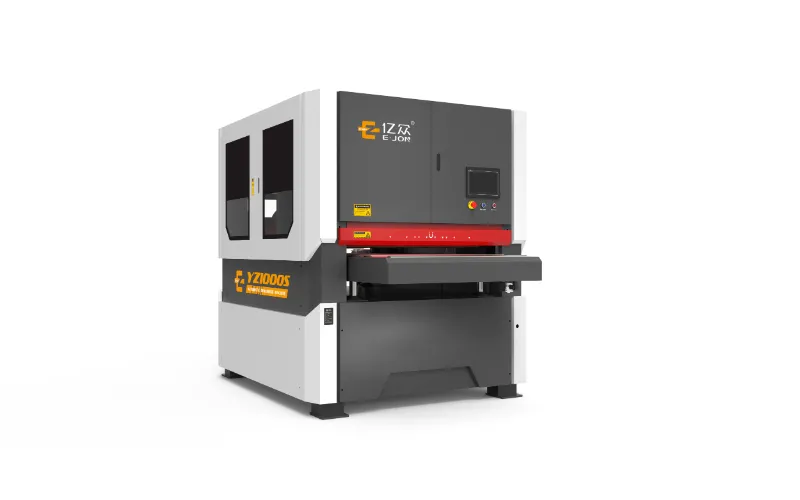
A sanding deburring machine is workshop equipment that uses an abrasive belt, brush, disc, or other sanding surface to remove sharp edges and small raised pieces of material left by cutting. In sign production, operators may use one after sawing, routing, shearing, or other fabrication steps. Deburring is the removal of unwanted burrs; edge finishing is the wider process of smoothing or refining an edge.
These terms matter because a machine that removes a heavy burr may need a different abrasive and feed setting from one used only to soften an edge. The right setup depends on the workpiece material, its thickness, the cut quality, and the finish required. Always check the machine and abrasive manufacturers’ operating instructions before changing settings or processing a new material.
Sign shops may use these machines to finish aluminum sign panels, metal letters, brackets, frames, and other fabricated parts. Depending on the machine’s design and approved materials, workshops may also process other metals or suitable non-metal materials. Confirm material compatibility with the machine maker before use.
Deburring does not replace inspection. A finished part should still be checked for sharp points, uneven edges, surface damage, and dimensions that matter to the next production step.
No single service-life number applies to every sanding deburring machine. A shop running occasional jobs has a different wear pattern from one operating several shifts a day. The most useful way to assess durability is to record machine hours, work volume, maintenance, and component changes.
Long operating hours, frequent starts and stops, heavy pressure, and poor housekeeping can increase wear. The load also depends on the work: removing a large burr may place more demand on the abrasive and drive system than light edge smoothing. Avoid forcing stock into the machine. Follow the manufacturer’s instructions for feed rate, pressure, and duty cycle.
Different materials and edge conditions call for different abrasives. An abrasive that is poorly matched to the work can wear quickly, clog, leave an unsuitable finish, or encourage an operator to apply excess pressure. Select the abrasive using its maker’s guidance and the machine manual. Check that the abrasive is correctly fitted, rated for the machine, and free from damage before operation.
Dust can collect on moving parts and inside electrical enclosures, while excessive heat may signal a problem with the process, abrasive, or equipment. Use dust extraction suited to the machine and material, and clean the equipment using the method specified by the manufacturer. OSHA’s general industry standards address machine guarding under 29 CFR 1910.212 and ventilation under 29 CFR 1910.94. Employers should assess which requirements apply to their workplace and materials.
Loose fasteners, worn bearings, damaged belts, blocked extraction, or misaligned parts can affect performance and increase wear. Use approved replacement parts and follow the maker’s service schedule. Do not continue operating a machine that has unusual vibration, noise, heat, or visible damage until it has been inspected by a qualified person.
Separate the life of the machine frame from the life of consumables and service parts. Abrasive belts and brushes are routine wear items; bearings, motors, switches, and drive components may need replacement or professional service over time. A belt change is not the same as the machine reaching the end of its useful life.
For a simple planning estimate, record annual operating hours and compare them with actual maintenance and repair history. For example, a shop that operates a machine for 6 hours a day, 5 days a week, for 50 weeks has a planned use of 1,500 hours a year (6 × 5 × 50). This is a workload calculation, not a predicted service-life figure. Actual lifespan depends on the model, operating conditions, care, and repair support.
Track these indicators in a maintenance log:
Use this record to spot changes. If the same job starts taking longer or produces a less consistent edge, check the abrasive, settings, alignment, extraction, and machine condition before assuming the machine needs replacement.
This practical routine can support reliable performance, but the machine’s manual takes priority. Assign trained staff to inspections and servicing, and isolate the machine from its energy source before cleaning or maintenance whenever the maker’s instructions require it.
Metal dust can present fire, health, and housekeeping hazards, and the risk depends on the material and process. Do not assume one extraction setup is suitable for every dust. Have a competent safety professional assess the materials, dust collection system, and applicable workplace requirements.
A durable machine is valuable when it can meet the shop’s production needs with predictable maintenance and acceptable edge quality. The benefit is not simply a long service life. Reliable equipment can help reduce interruptions, rework, and variation between parts, while a clear maintenance record makes repair and replacement decisions easier.
Compare machines on the factors that affect your operation: suitable materials and part sizes, abrasive availability, guarding, extraction compatibility, service support, spare-part access, operator training, and warranty terms. Ask suppliers for documented specifications and a demonstration using representative workpieces. Treat unverified claims such as “lasts twice as long” as marketing until the supplier defines the test conditions and provides supporting data.
There is no universal lifespan. Model design, operating hours, materials, abrasives, maintenance, and repair support all affect useful life. Use the manufacturer’s guidance and your own operating and repair records to make a realistic estimate.
Replace it when inspection or performance shows that it is worn, damaged, clogged, or no longer producing the required finish. Follow the abrasive maker’s instructions; there is no reliable change interval that applies to every job and material.
Only if the machine and abrasive are approved for both materials and the process prevents cross-contamination or other quality problems. Confirm compatibility with the machine and abrasive manufacturers, and follow workplace controls for each material.
New or increasing vibration, unusual noise, excess heat, inconsistent finishing, dust escaping from extraction points, or damaged guards are reasons to stop and investigate. Have qualified personnel inspect the equipment before returning it to service if a safety defect is suspected.
No. A machine can suit repeat work and consistent edge finishing, while hand tools may be more practical for some small, delicate, or irregular parts. Choose the method based on part geometry, volume, finish requirements, operator safety, and the tool maker’s instructions.
Start by listing the materials, part sizes, edge conditions, and weekly operating hours in your sign shop. Then review the equipment user guide, maintenance schedule, abrasive requirements, guarding, and extraction needs before purchase or setup. If you are assessing Ejon Flying equipment, request model-specific specifications and a trial on representative sign parts, and compare the results with your current process. This approach helps you judge whether a durable sanding deburring machine for sign fabrication fits your workload and maintenance plan.
Hot Products

Equipped with full servo control system to ensure the accuracy and stability of feeding, slotting, and bending function.

Manipulator alternately feeding structure, the material clamps are casted which can avoid scratching the matenial, mean while improving the feeding holding.

Productive: Cutting, Notching, Flanging, Bending & Shearing. All the functionl will short the letter making time.

Adaptable: can process all kinds of materials used in making sign letters, such as stainless steel, galvanized steel, flat aluminum, profile aluinum and channelume.

EJON Sanding-Deburring Machine-YZ1000G
Application: remove solid slag and burrs on the surface of workpiece; remove rust and oxide layer on the surface of the workpiece; Round the internal and external contours at the edge of metal sheet.

EJON Sanding-Deburring Machine-YZ1000S
Application: remove solid slag and burrs on the surface of workpiece; remove rust and oxide layer on the surface of the workpiece; Round the internal and external contours at the edge of metal sheet.

EJON Sanding-Deburring Machine-YZ1000SS
Supporting laser cutting machine, CNC stamping, various CNC processing or other machining deburring front production line.

EJON Sanding-Deburring Machine
Supporting laser cutting machine, CNC stamping, various CNC processing or other machining deburring front production line.

Industries: metal cutting, electrical switch manufacturing, aerospace, food machinery, textile machinery, engineering machinery, locomotive manufacturing Agriculture and forestry machinery

Laser Welding Machine-300watt/500watt
YAG laser transmission welding, 5 meter fiber optic tube, high temperature resistance handheld laser welding handheld.
